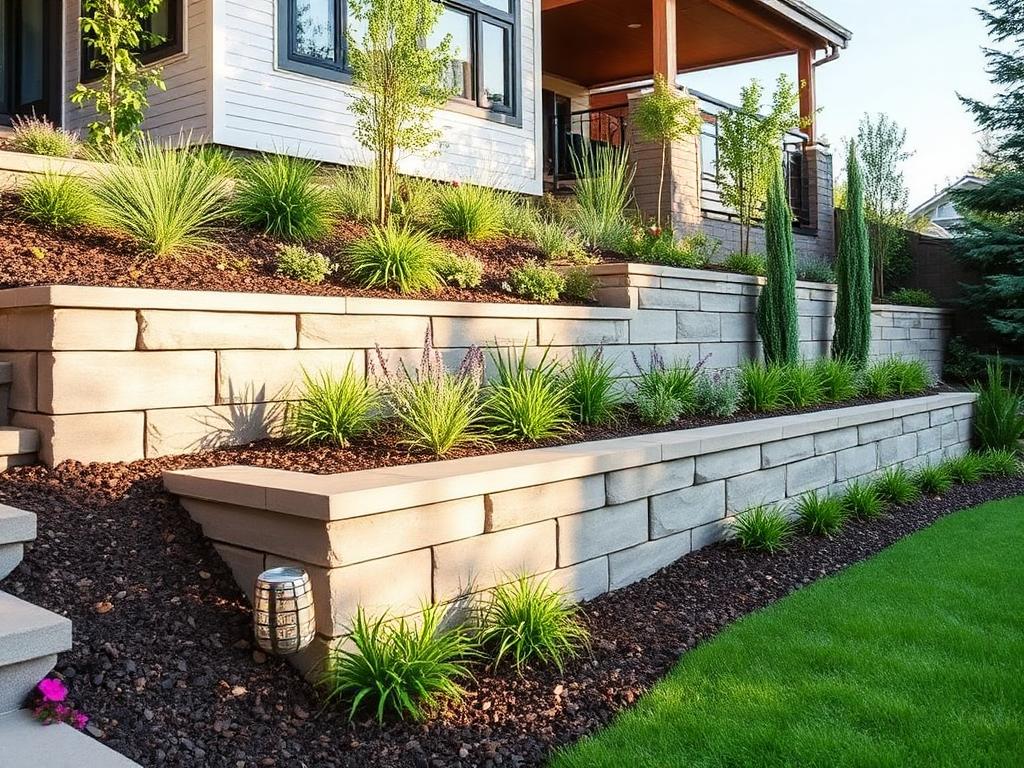
Jacksonville Retaining Walls
Structurally Engineered Retaining Walls for Jacksonville’s Soil, Rain, and Building Code
Retaining walls fail more often in Florida than in most other states. The reasons are predictable — sandy soil with poor cohesion, heavy seasonal rainfall that saturates fill materials, and contractors who build walls that look fine until the first major storm reveals they have no drainage. First Coast Masonry builds retaining walls from the ground up with drainage and structural engineering as the starting point, not as features added after the design is already set.
We work with brick, concrete masonry unit (CMU) block, and natural stone — selecting materials based on wall height, structural load requirements, and the aesthetic context of the property.
Why Retaining Walls Fail in Florida
Understanding failure modes is the most useful thing a Jacksonville property owner can know before hiring a retaining wall contractor. The three primary causes of retaining wall failure in Northeast Florida are:
1. Inadequate Drainage
Water pressure behind a retaining wall — called hydrostatic pressure — multiplies the lateral force the wall must resist. In a typical rainwater infiltration scenario, saturated soil behind a wall can exert two to three times the lateral pressure of dry soil.
Florida’s rainfall is substantial and often intense. A summer thunderstorm can drop two to three inches of rain in an hour. If that water doesn’t have a clear path through and away from the retained fill, it accumulates behind the wall and eventually pushes it over — regardless of how solid the masonry itself looks.
The fix: proper drainage aggregate behind the wall, perforated drain pipe at the footing level, and drainage outlets through the wall face (weep holes or spaced vertical joints in the base course). This isn’t optional — it’s the difference between a wall that lasts 40 years and one that leans over in three.
2. Insufficient Footing Depth and Bearing
Jacksonville’s sandy soils provide less bearing capacity than clay soils common in other parts of the country. Footings sized for Georgia clay performance will move in Duval County sand. Retaining walls require footings extended below the active soil zone, properly sized for the wall height and load conditions.
Frost depth is not a significant factor in Jacksonville (we’re essentially frost-free), but bearing capacity and footing embedment depth are still critical. A footing sitting on loose fill or insufficiently compacted subgrade will allow wall movement under load.
3. Inadequate Wall Thickness and Reinforcement
Retaining walls are structural elements — they’re resisting real lateral forces. The wall section must be designed with adequate mass or reinforcement to handle those forces. CMU retaining walls must follow Florida Building Code Section R404 provisions, including minimum wall thickness, maximum unsupported height, and reinforcement requirements based on soil conditions and surcharge loads.
Decorative landscape blocks from the home improvement store can be used for low garden borders (under 24 inches), but anything taller that retains significant earth must be built as a structural wall or engineered as one.
Jacksonville Retaining Wall Services — Materials and Methods
CMU Block Retaining Walls
Reinforced concrete masonry is our most common choice for retaining walls over three feet in height. CMU block retaining walls can be:
- Conventional reinforced CMU — Standard 8-inch or 12-inch block cores filled with concrete grout and vertical rebar at specified spacing. For tall walls (over 4 feet), a structural engineer typically provides design drawings specifying reinforcement.
- Segmental retaining wall block — Interlocking concrete block units (Allan Block, Versa-Lok, and similar products) that create battered (slightly angled back) gravity walls. These rely on the wall’s mass and batter to resist lateral forces, with reinforcement in geogrid layers for taller walls.
CMU retaining walls can receive a variety of finish treatments: painted, stucco-coated, or stone-veneered to match the surrounding landscape.
Brick Retaining Walls
Brick retaining walls are more common in lower-height applications — garden borders, terrace walls, raised planting beds — and in settings where brick masonry is already established on the property and visual consistency matters. Structural brick retaining walls (over 3 feet) require reinforcement and drainage detailing equivalent to CMU walls.
Stone Retaining Walls
Natural stone retaining walls fall into two categories:
Dry-stacked stone — Stone stacked without mortar, relying on mass, batter, and friction for stability. Suitable for walls under 3 feet where drainage through the wall face is integral to the system. Dry-stacked walls have natural drainage — the voids between stones let water escape. They require skilled selection and placement to maintain long-term stability.
Mortared stone — Natural or cultured stone set in mortar over a CMU or concrete structural backup wall. The stone provides the aesthetic; the CMU wall handles the structural load. This is the most architecturally flexible option and common on upscale residential properties.
Retaining Wall Repair and Drainage Solutions in Jacksonville
We treat drainage as a first-class design element on every retaining wall project:
Drainage Aggregate — A zone of clean, free-draining aggregate (typically 3/4-inch crushed stone) is placed directly behind the wall face, at minimum 12 inches wide from footing to top of wall.
Perforated Pipe — A 4-inch perforated drain pipe (French drain) at the footing level channels accumulated water to daylight at the end of the wall or to a collection point.
Weep Holes — On solid mortared walls, vertical joints in the first course above grade are left ungrouted to allow water to exit. These must be kept clear of mulch and debris.
Filter Fabric — Geotextile filter fabric separates the drainage aggregate from the native soil, preventing fine soil particles from migrating into and clogging the drainage system.
Waterproofing Membrane — On below-grade or in-ground portions of structural retaining walls, a waterproofing membrane on the soil side prevents moisture from saturating the masonry itself.
Jacksonville Retaining Wall Contractors and Structural Requirements
In Jacksonville and Duval County, retaining walls over 4 feet in retained height typically require a building permit and engineered drawings. We coordinate with structural engineers for these projects — either working with an engineer you’ve already engaged or coordinating through our established relationships with licensed Florida structural engineers.
What engineering addresses:
- Soil bearing capacity (geotechnical input if needed on complex projects)
- Overturning and sliding stability calculations
- Reinforcement schedules (rebar size, spacing, and embedment depth)
- Foundation design
- Surcharge loads — where a driveway, structure, or other load sits near the top of the wall
Don’t hire a contractor who tells you a 6-foot retaining wall doesn’t need engineering. It does, and the permit process will require it anyway.
Our Retaining Wall Construction Process
1. Site Assessment — We visit the site, evaluate the slope geometry, soil conditions, drainage patterns, and any surcharge loads near the proposed wall.
2. Permit Determination — We determine the permit requirement based on wall height and jurisdiction. Duval County, Clay County, St. Johns County, and Nassau County each have slightly different thresholds and processes.
3. Engineering Coordination — For walls requiring engineering, we coordinate drawing production before finalizing scope and schedule.
4. Excavation and Footing — Below-grade excavation for the footing and base course, footing form and pour, and inspection coordination where required.
5. Wall Construction — Block, brick, or stone installation per the approved design, with drainage aggregate and pipe placement integrated as the wall goes up.
6. Backfill and Compaction — Backfill placed in lifts with appropriate compaction equipment, stopping short of the drainage zone.
7. Final Inspection and Grading — Final building inspection, surface grading to direct surface water away from the wall, and any finish landscaping coordination.
First Coast Retaining Wall Service Area
First Coast Masonry builds retaining walls throughout the Jacksonville metro area and surrounding First Coast counties:
- Duval County — Jacksonville, Jacksonville Beach, Atlantic Beach, Neptune Beach
- Clay County — Orange Park, Fleming Island, Green Cove Springs, Middleburg
- Nassau County — Fernandina Beach, Yulee, Callahan, Hilliard
- St. Johns County — St. Augustine, Ponte Vedra, Palm Valley, Nocatee, Switzerland
- Baker County — Macclenny and surrounding areas (limited availability)
We handle permit applications for all jurisdictions we serve.
Frequently Asked Questions — Jacksonville Retaining Walls
Why do retaining walls fail so often in Florida?
The combination of sandy soil, heavy rainfall, and insufficient drainage causes the majority of retaining wall failures in Northeast Florida. Sandy soil has low cohesion — when it gets saturated, it flows. Without drainage aggregate and a perforated drain pipe at the footing level, water pressure builds behind the wall until it fails. Many retaining wall failures that look like masonry failures are actually drainage failures. We build drainage into every wall from the start.
What materials are best for retaining walls in Jacksonville?
For walls over 3 feet in retained height, reinforced CMU block is typically the most cost-effective and structurally reliable choice. For lower landscape and garden walls, brick and mortared stone give you aesthetic options that blend with the surrounding property. Natural dry-stacked stone walls are beautiful and inherently drainage-permeable, but require skilled installation to maintain stability over time.
Do retaining walls need drainage?
Yes — without exception. Any wall retaining more than 18-24 inches of soil should have a drainage system behind it. This isn’t a luxury; it’s a structural requirement. We never build retaining walls without drainage aggregate, perforated pipe, and weep holes or equivalent drainage provisions.
How high can a retaining wall be without a permit in Jacksonville?
In Duval County, retaining walls over 4 feet in total height (measured from the bottom of the footing to the top of the wall) generally require a building permit and engineering drawings. The threshold varies slightly between municipalities and counties on the First Coast. We determine the exact requirement for your project during the site assessment phase.
Do I need a permit for a retaining wall?
Possibly. Walls under approximately 4 feet in retained height in most First Coast jurisdictions can be built without a permit, but this varies. Walls over that threshold almost always require a permit and may require engineering. There are also setback considerations — retaining walls near property lines may require additional review. We clarify permit requirements for every project before we start.
Request a Free Retaining Wall Estimate
A well-built retaining wall protects your property, manages drainage, and holds up to whatever Florida throws at it. A poorly built one fails quietly until it doesn’t — usually after a hard rain. First Coast Masonry builds walls that are designed from day one for Jacksonville’s soil and rainfall conditions.
Contact us for a free written estimate. We’ll assess the site, evaluate drainage conditions, and provide a clear scope of work before any contracts are signed.